

For today’s enterprises, the network is far more than an IT asset. It is the operational backbone of the business. Every transaction, application, customer interaction, and data exchange depends on a secure, high-performing network infrastructure. Gartner’s 2025 research highlights this reality, with 89% of organizations identifying network availability and reliability as critical to business continuity. At the same time, growing adoption of cloud services, distributed architectures, and remote work has expanded the attack surface. Cisco’s 2024 Annual Cybersecurity Report notes that 71% of breaches now involve vulnerabilities in complex, interconnected network systems, underscoring how the expansion of network environments introduces new risks.
From phishing and social engineering to ransomware and lateral movement attacks, cyber threats evolve faster than most organizations can respond. The uncomfortable truth is that most breaches do not occur because security tools are absent, but because weaknesses within the network weaknesses go undetected for too long. This is why routine network security testing must be treated as a core element of enterprise risk management. It is not a one-time compliance exercise, but an ongoing, strategic discipline.

The Role of a Resilient Network in Business Continuity
A resilient network does more than enable connectivity. It protects sensitive data, sustains critical operations, and preservers trust with customers and stakeholders. A single overlooked issue, such as an unpatched firewall rule, misconfigured VPN, or an exposed endpoint, can quickly escalate into wide-reaching disruption.
For business and IT leaders, the question is no longer whether network security should be tested, but how consistently and intelligently it is done. Routine network shifts from a reactive function to a proactive, measurable practice that strengthens both technical defenses and organizational confidence.
Why Routine Network Security Testing Matters
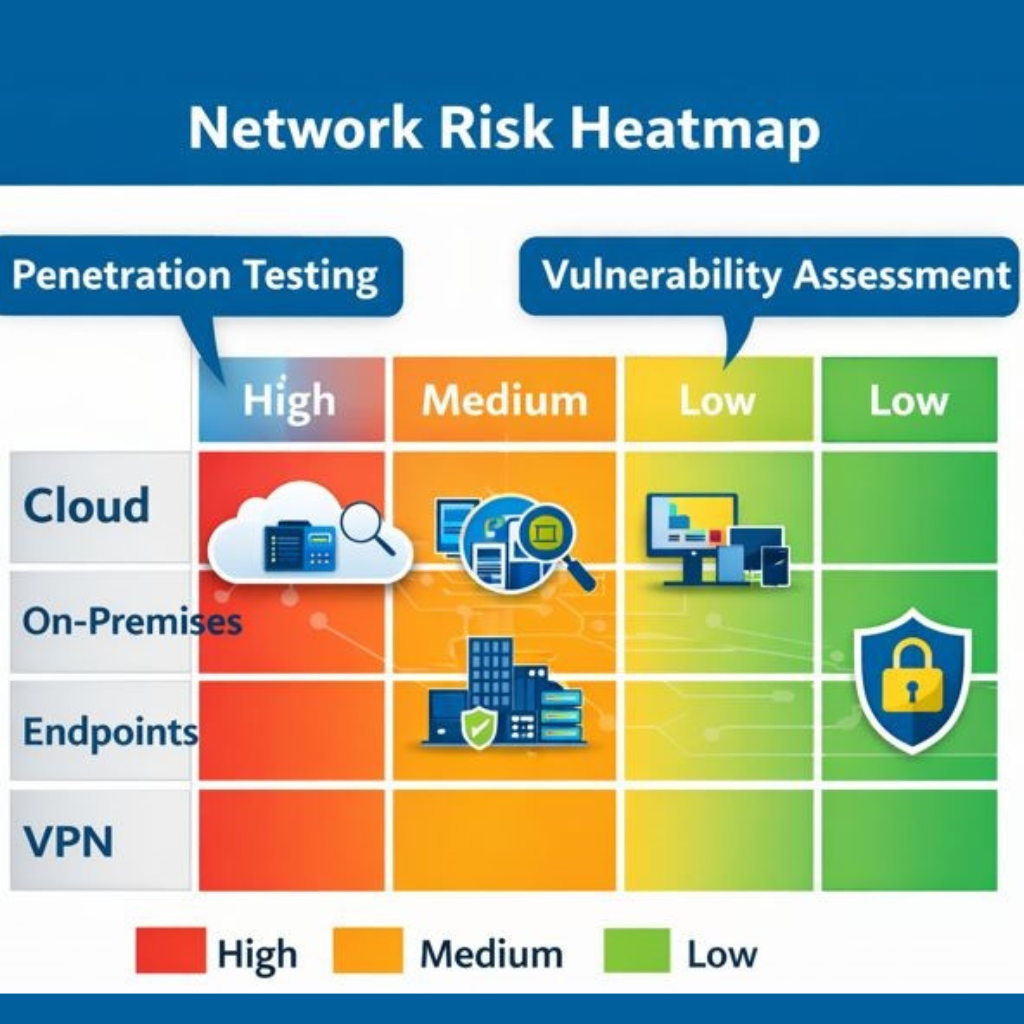
Network security testing evaluates the effectiveness of an organization’s defenses, controls, and incident readiness. Importantly, not all parts of the enterprise network carry the same level of risk. A risk-based approach helps leaders focus testing efforts where they deliver the greatest impact.
When performed consistently, network testing offers several strategic benefits:
1. Identifying Hidden Vulnerabilities
Routine security scans uncover weaknesses that may not be apparent during normal operations. These include misconfigured network devices, outdated firmware, exposed ports, or weak access policies. Early detection allows teams to remediate risks before they are exploited.
Complexity itself is not the problem. Unmanaged complexity is. When visibility is fragmented, accountability diffuses, and resilience weakens.
2. Measuring the Effectiveness of Security Controls
Firewalls, segmentation policies, intrusion detection systems, and access controls are only effective when they are configured and maintained correctly. Regular testing validates that these controls perform as intended and highlights gaps that require attention.
3. Supporting Compliance and Governance
Regulatory frameworks like HIPAA, PCI DSS, and GDPR require demonstrable diligence in securing networks. Ongoing testing supports compliance efforts, simplifies audits, and reduces risk of penalties or findings.
4. Preventing Costly Data Breaches
The reputational and financial consequences of a data breach can be severe. Proactive network security testing reduces the likelihood of unauthorized access, data loss, or operational downtime by addressing weaknesses early.
5. Enhancing Incident Response Readiness
Testing does more than identify vulnerabilities. It also evaluates how effectively incidents are detected, escalated, and contained. This insight allows organizations to refine their incident response plans and reduce recovery time.
6. Building Long-Term Cyber Resilience
Resilience is not about avoiding attacks entirely. It is about maintaining operations and recovering quickly when incidents occur. Regular testing strengthens the network’s ability to withstand disruption and continue critical business functions.
7. Avoiding Financial and Operational Losses
Beyond breaches, insufficiently tested networks can lead to legal exposure, customer churn, and productivity losses. Preventive testing is consistently more cost-effective than reacting to incidents after damage has occurred.
8. Fostering Continuous Improvement
Cyber threats evolve constantly. Routine testing creates a culture of continuous improvement, enabling organizations to adapt defenses in line with emerging threats and best practices.
Essential Network Security Testing Methods
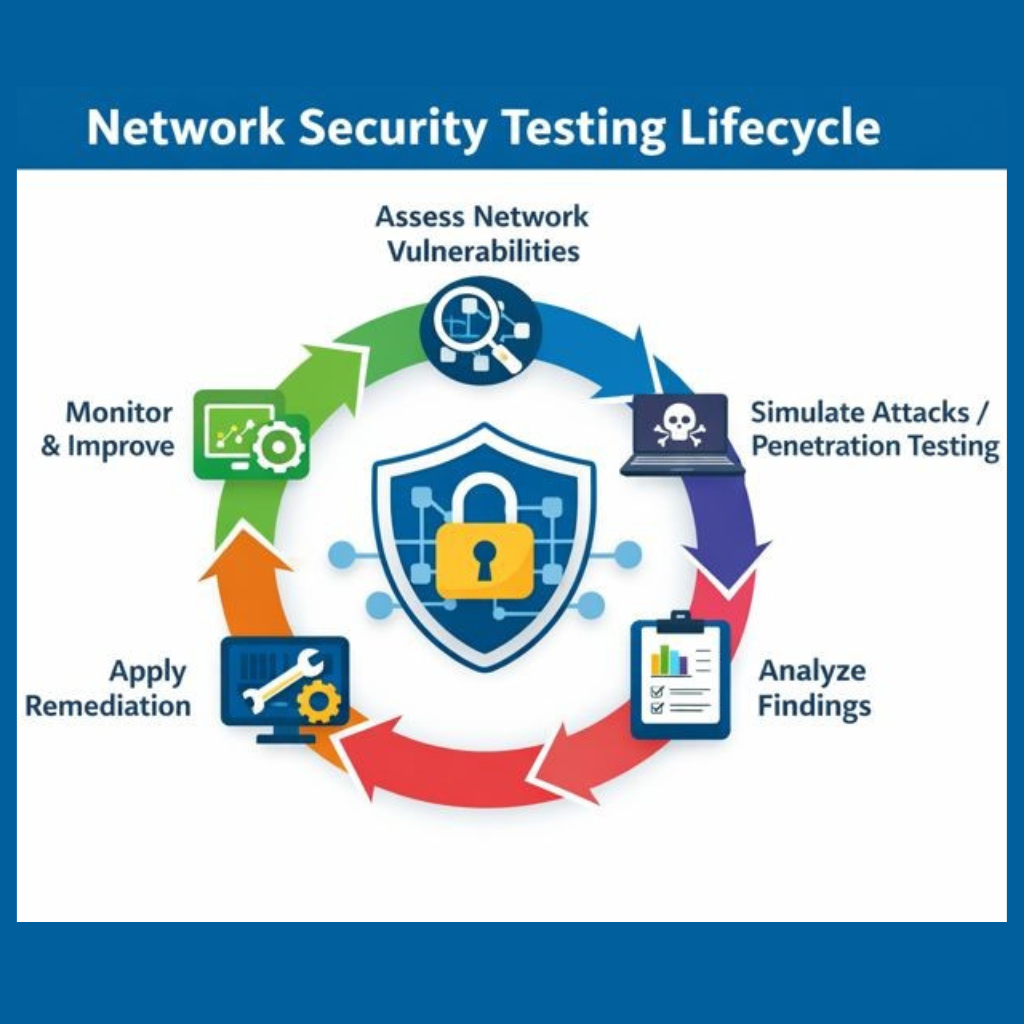
A effective testing strategy combines multiple approaches to evaluate network defences over time. Network security testing should follow a continuous lifecycle that assesses risk, validates controls, and strengthens resilience.
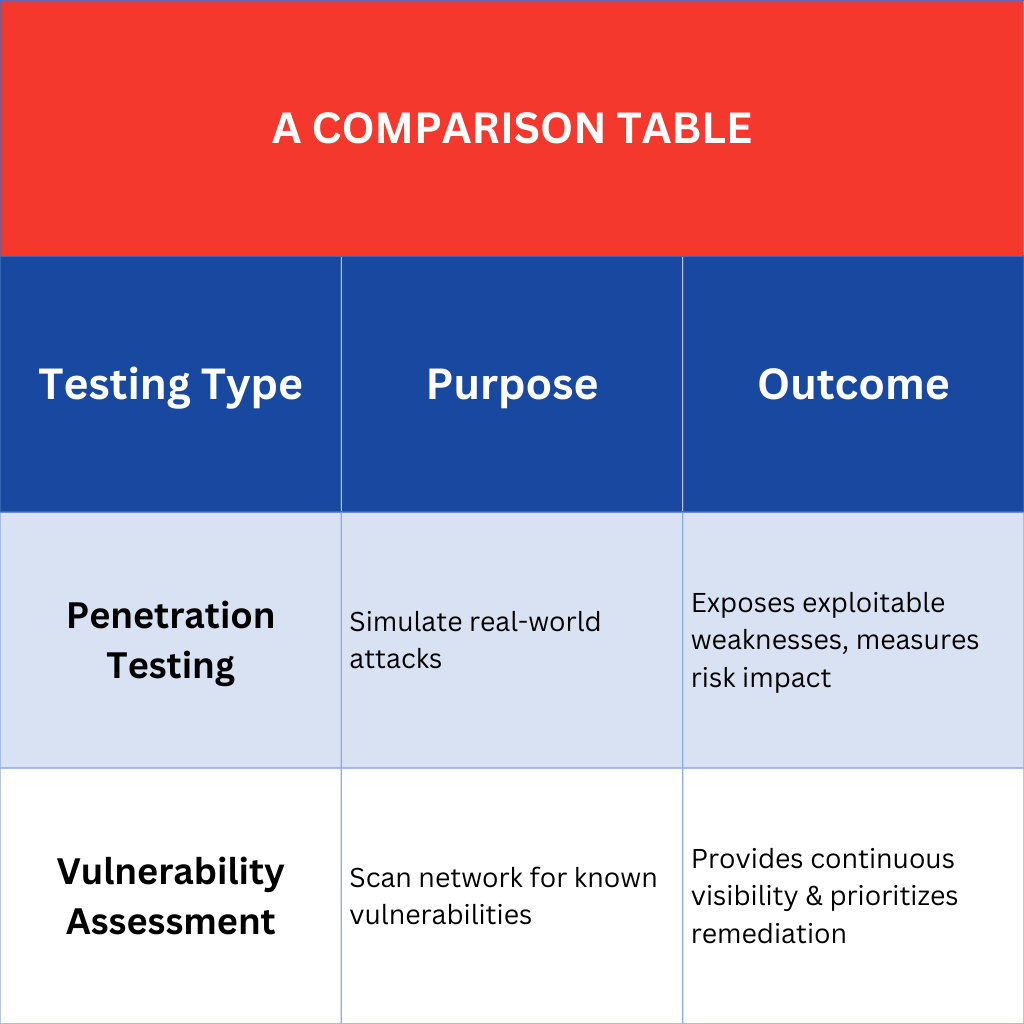
Two methods are particularly effective for modern enterprise networks:
Penetration Testing: Simulating Real-World Attacks
Penetration testing uses controlled simulations to replicate real-world attack scenarios against the network infrastructure. By thinking like an attacker, organizations gain a clear understanding of how vulnerabilities could be exploited and what the potential business impact would be. This approach turns abstract risk to actionable insight.
Vulnerability Assessments: Continuous Risk Visibility
Vulnerability assessments scan network devices, systems, and connections for known weaknesses and misconfigurations. Unlike point-in-time audits, ongoing assessments provide continuous visibility into the network’s security posture, allowing teams to prioritize remediation efforts effectively.
When integrated with managed network services, these methods ensure that network risks are identified, assessed, and mitigated systematically—without overburdening internal teams.
Why Managed Network Security Testing Makes Strategic Sense
As enterprise networks span on-premises infrastructure, cloud platforms, and remote endpoints, managing security testing internally becomes increasingly complex. Many organizations struggle with limited resources, specialized skill gaps, or lack of continuous monitoring capabilities.
Partnering with a managed network services provider addresses these challenges. A managed approach ensures that:
- Network security testing is conducted consistently and proactively
- Findings are translated into actionable remediation steps
- Network defences evolve in step with the threat landscape
Rather than reacting to incidents, organizations gain confidence that their digital backbone is continuously tested, hardened, and optimized.
Strengthening Your Network Without the Burden
When it comes to network security, there is little margin for error. Routine network-focused security testing is no longer optional. It is foundational to business continuity, operational resilience, and customer trust.
By working with a trusted managed network engineering provider, organizations can reduce complexity while gaining stronger defenses, better visibility, and lasting peace of mind.
At TaaS, we help enterprises build, test, and protect resilient networks that support growth rather than risk.
Connect with us for a no-obligation consultation and take the next step toward a secure, dependable network foundation.