

The enterprise is moving from AI that answers questions to AI that takes action. The infrastructure challenge may be bigger than the model. For the past two years, the enterprise AI conversation has been dominated by a deceptively simple question: What can AI do for us? Can it write software? Summarize documents? Analyze data? Answer customer questions? Automate repetitive work?
That question is already becoming outdated. The more consequential question for technology leaders is:
What happens when AI stops waiting for instructions and starts acting on the organization’s behalf?
That shift is already underway!
The next generation of enterprise AI is increasingly agentic: systems that can interpret objectives, make decisions, call APIs, interact with applications, retrieve information and execute multi-step workflows with varying degrees of human supervision.
To Outsmart AI, Contact us at: hello@taas1.com.
The Moment AI Gets Credentials, Everything Changes
A chatbot can be relatively easy to contain. Give it access to a knowledge base and ask it to answer questions. If it produces a bad answer, a human can ignore it. An AI agent is different. Give that same system permission to create a customer record, modify a database, provision a cloud resource, approve an expense or deploy code, and it becomes an operational actor.
The distinction is profound.
For decades, enterprise IT has been designed around two broad categories of actors:
humans and machines.
Humans authenticate. Machines execute. But not, AI agents blur that boundary.
An agent can behave like a machine, reason like a human, operate continuously and interact with multiple systems at machine speed. Recent enterprise security discussions are consequently beginning to focus on giving AI agents their own identities, permissions and behavioural controls rather than simply treating them as another application. This creates an uncomfortable question:
Does your organization actually know what its AI agents are allowed to do?


The Permission Problem Nobody Wants to Discuss
Imagine an AI agent responsible for resolving IT incidents. It has access to monitoring systems, ticketing platforms, cloud infrastructure and internal documentation. Initially, its permissions are carefully scoped. Then someone decides it should also be able to restart services. Then access logs. Then create infrastructure. Then modify configurations. Individally, these decisions may appear reasonable. Collectively, they grant the agent something far more consequential: operational authority.
And unlike a human employee, an AI agent does not go home at 6 p.m.
It can execute thousands of actions in minutes. That changes the mathematics of both productivity and risk. An error that would once have taken a human hours to make can potentially be reproduced by an autonomous system at extraordinary speed. This is why traditional identity and access management models are beginning to look inadequate for agentic environments.
The new control plane may be identity
The enterprise security model of the future may not begin with the question: “Is this user authorized?” Instead, it will ask: “What is this agent? What is it trying to do and should it be allowed to do it right now?”
That requires considerably more than a username and password.
AI agents need:
- Persistent or cryptographically verifiable identities
- Explicit, granular permissions
- Short-lived credentials
- Context-aware authorization
- Complete audit trails
- Behavioral monitoring
- The ability to revoke access immediately
And perhaps most importantly, permissions should be tied to actions rather than simply applications. An agent that is allowed to read a production database should not automatically be allowed to modify it. An agent allowed to restart a server should not automatically be allowed to delete it.
The principle is familiar: least privilege. What is new is the scale and autonomy at which it must operate.
AI Infrastructure is Becoming a different Kind of Infrastructure
There is another change happening underneath the agentic AI story. AI workloads are forcing enterprises to rethink infrastructure itself. Traditional enterprise computing was designed around relatively predictable applications and workloads.
AI inference is different. It is continuous, bursty, compute-intensive and extremely sensitive to latency.
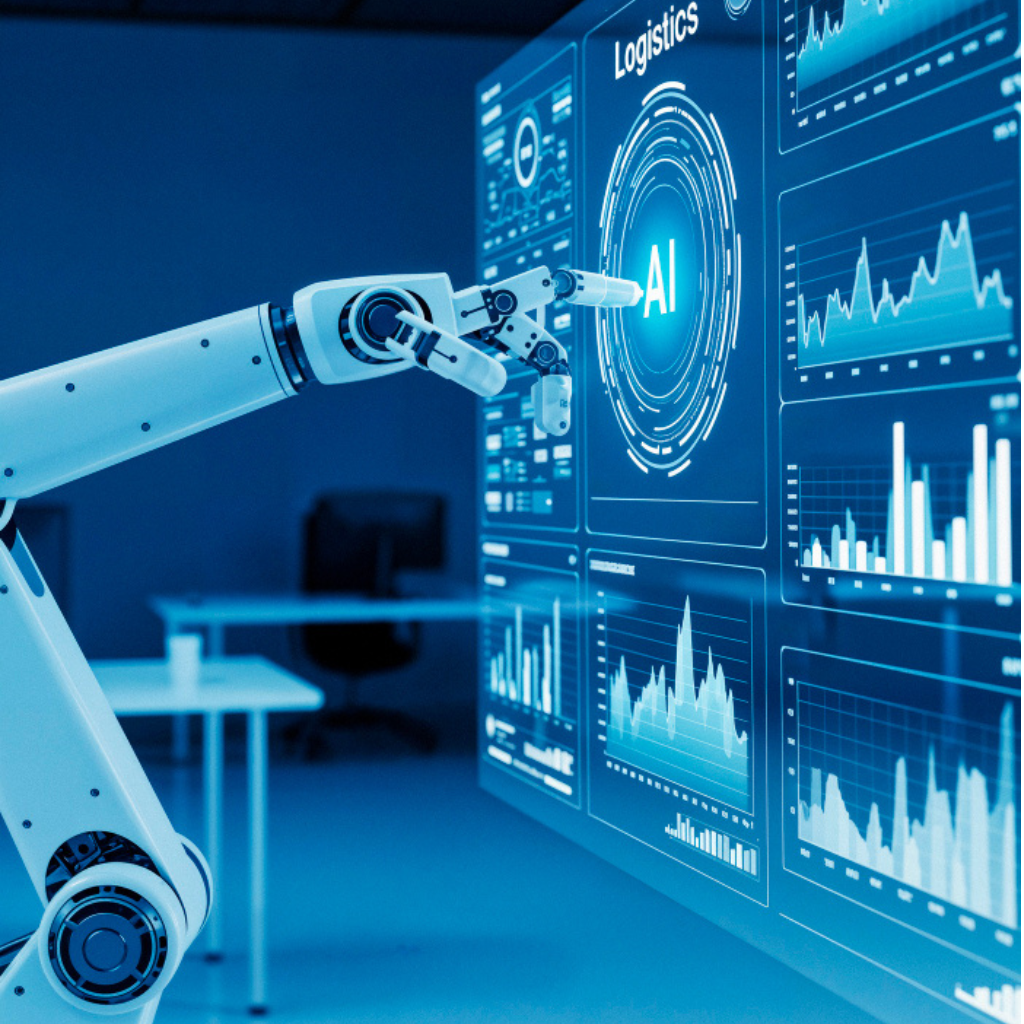

As AI moves from experimentation into production, organizations are discovering that existing compute strategies often weren’t designed for the volume and economics of inference. Deloitte identifies inference cost, scalability and latency as major drivers of this infrastructure rethink.
And then there is the GPU.
For years, infrastructure teams thought primarily in terms of CPU, memory and storage.
AI has introduced a fourth strategic resource: accelerated compute.
The result is an emerging infrastructure question that has surprisingly little to do with AI models:
How do you make expensive compute continuously available without continuously wasting it?
This is where techniques such as GPU virtualization, time-slicing, workload scheduling and intelligent inference placement become increasingly important.
The model may be the visible part of AI.
Infrastructure determines whether the model is economically viable. And then comes sovereignty.
There is another dimension that CIOs cannot afford to ignore: where AI actually runs. For organizations dealing with sensitive data, regulated workloads or strategic intellectual property, sending every AI request to an external model hosted somewhere else may eventually become an uncomfortable proposition.
Sovereign AI is moving beyond government policy debates and into enterprise architecture.
But sovereignty isn’t simply about where the data is stored.
It encompasses where the model runs, where inference occurs, who controls the infrastructure, which jurisdiction governs the data and how dependent the organization is on an external provider.
Deloitte’s 2026 research describes sovereign AI in precisely these broader terms, while Gartner is highlighting sovereign, cost-optimized inference at the edge as an emerging enterprise concern.
That changes the architecture conversation.
The future may not be: cloud OR on-premises.
It may be:
the right workload, running in the right place, under the right controls.
The enterprise AI stack is being rebuilt
This is why the most interesting AI conversation is not really about which model is smartest.
Models are improving at extraordinary speed.


The harder problem is everything around them.
- Identity.
- Data.
- Inference.
- Compute.
- Networking.
- Security.
- Governance.
- Observability.
- Recovery.
The companies that win with AI won’t just have the most powerful models. They will build the most resilient operational system around them.
That is a subtle but important distinction. AI is rapidly becoming a commodity capability.
Trusted, governed and economically sustainable AI infrastructure will not be.
The question for CIOs has changed
The first wave of enterprise AI asked: Where can we use AI? The second wave is asking:
How do we scale it? The next question will be considerably harder: How do we give AI enough autonomy to create value without giving it enough freedom to create unacceptable risk?
That is no longer an AI question.
It is the next great enterprise IT architecture question.
And organizations that start solving it now will have a significant advantage over those waiting for the technology to mature. Because the technology won’t wait.
The agents are already arriving.