In October 2026, a global law-enforcement operation disrupted a cybercrime network linked to more than one billion phishing messages targeting over 75,000 organizations across 150 countries. The operation revealed the scale of the infrastructure supporting modern phishing campaigns, including tools for impersonating trusted institutions and creating fraudulent websites.
The Phishing Threat Has Evolved
Imagine receiving an email from your CEO requesting an urgent payment, a supplier asking you to update banking details, or a Microsoft 365 notification requiring you to reauthenticate your account. The branding is convincing, the language is professional, and the request fits an ongoing business activity.
Yet that seemingly routine message may be the first step in a highly orchestrated attack designed to exploit trust.
Generative AI has dramatically lowered the cost and effort required for attackers to create convincing, personalized communications at scale. Public information, compromised email accounts and business correspondence can help them replicate communication styles, understand reporting structures and exploit legitimate workflows. AI-generated voice and video can add another layer of impersonation.
The result is a fundamental shift in the security challenge: organizations can no longer depend on employees identifying obvious grammatical errors, unfamiliar senders or suspicious formatting.
Gartner’s September 2026 survey of 297 cybersecurity leaders found that 79% had experienced at least one email phishing, spear-phishing or business email compromise incident in the preceding 12 months. Even more concerning, 41% reported at least one social engineering incident involving a deepfake during an employee audio call. Gartner’s findings underscore the need to treat phishing as an identity, process and security-control problem—not merely an awareness issue.
To `Unhook" Contact us at: hello@taas1.com.
Common Phishing Techniques Every Executive Should Understand
Email phishing: Attackers impersonate trusted organizations or colleagues to deliver malicious links, attachments or credential-harvesting pages. A successful compromise can lead to account takeover, malware deployment or unauthorized access to business systems, resulting in operational disruption, data exposure and recovery costs.
Spear-phishing: These targeted campaigns use research about specific employees, executives, suppliers or business transactions. By exploiting organizational context, attackers make fraudulent requests appear consistent with legitimate work, increasing the likelihood of credential theft, unauthorized transactions or disclosure of confidential information.
Business email compromise (BEC): Attackers impersonate executives, finance personnel or vendors to manipulate payment approvals, change supplier bank details, redirect payroll or obtain confidential information. Some attacks use compromised legitimate accounts, making sender reputation alone insufficient. These attacks often result in direct financial losses before they are detected.
AI-powered impersonation: Synthetic voices, deepfake video and AI-generated messages can support fraudulent instructions during calls, meetings or email exchanges. High-value requests may appear to come from a familiar executive even when the identity has not been verified, potentially leading to unauthorized payments, disclosure of sensitive information or fraudulent business decisions.
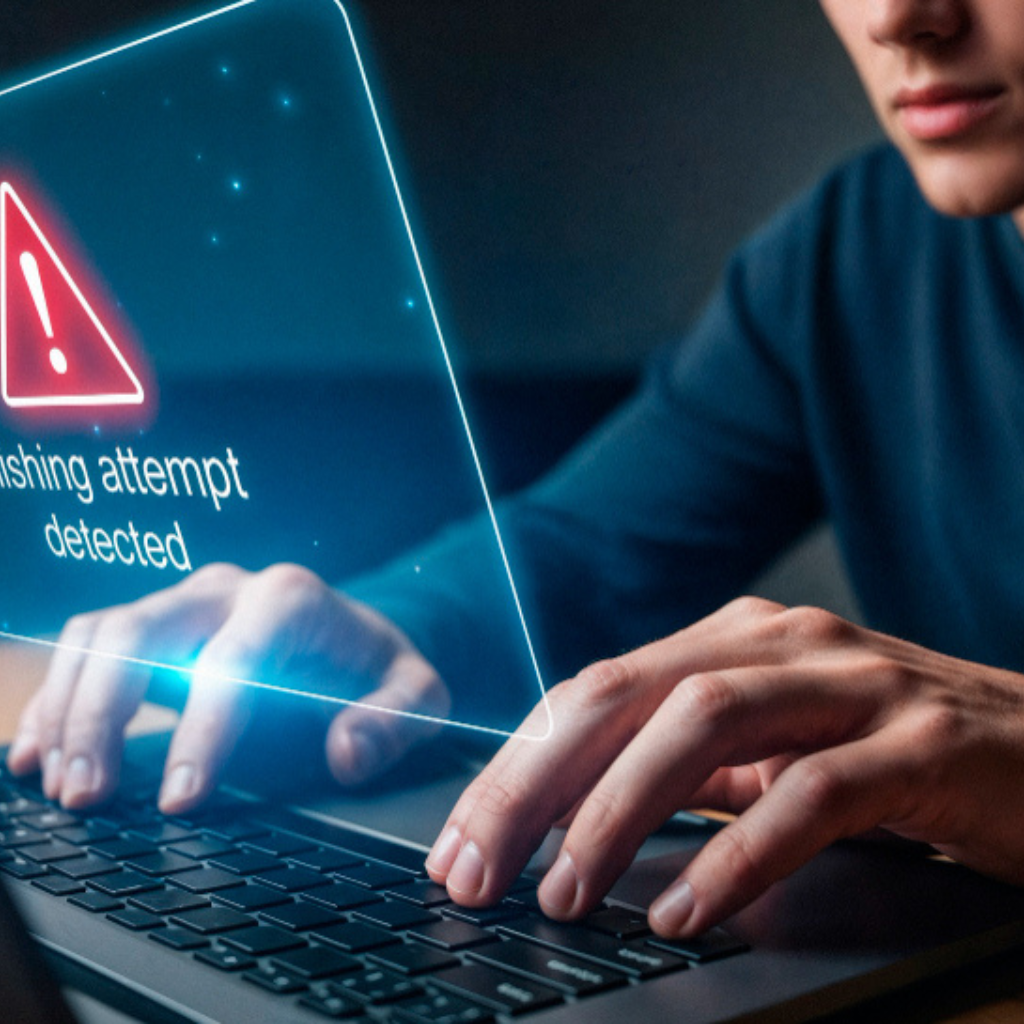
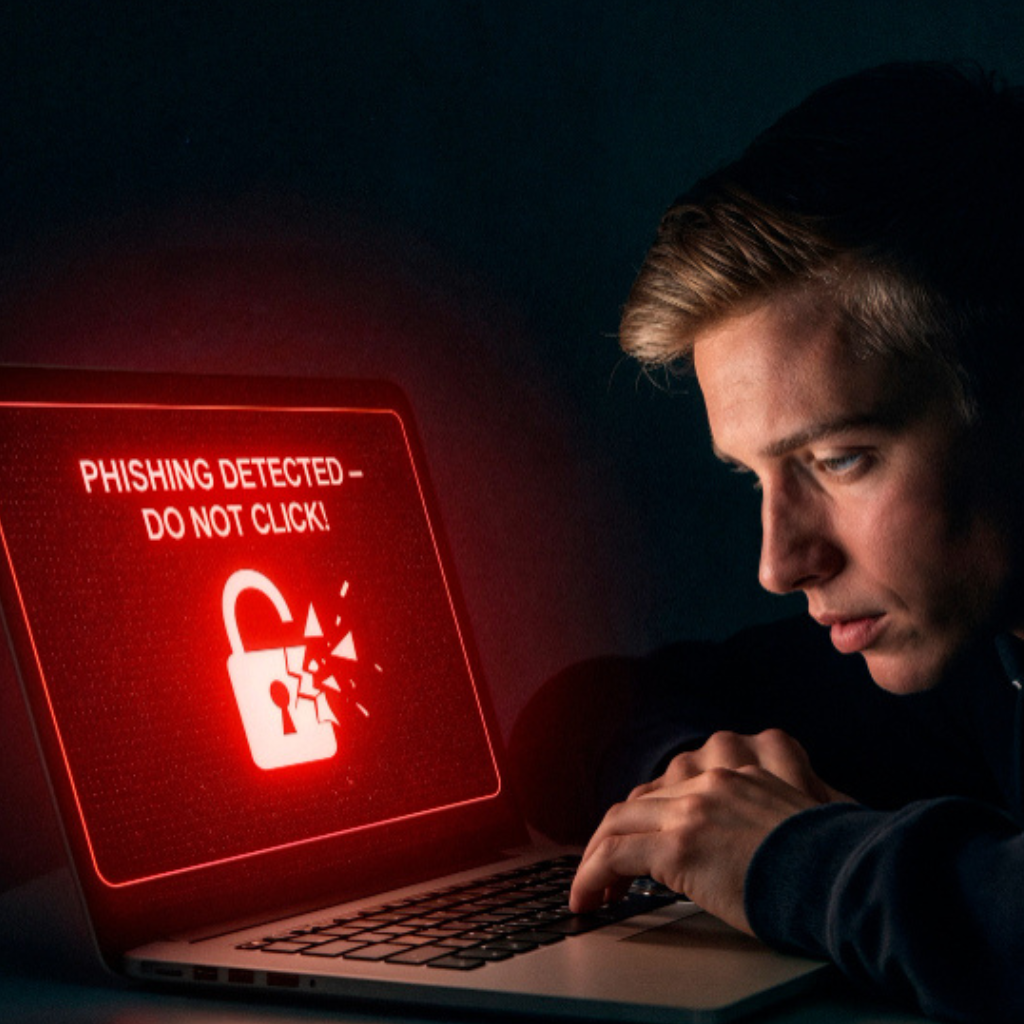
Smishing, vishing and QR-code phishing: Fraudulent text messages, phone calls and QR codes direct users to malicious websites or persuade them to disclose credentials, approve access or share sensitive information. These channels can bypass controls focused primarily on corporate email, resulting in compromised accounts, unauthorized system access and data theft.
Five Ways to Strengthen Your Organization’s Phishing Défense
Effective protection requires multiple layers of preventive, detective and responsive controls.
Strengthen Identity and Access Security
Enforce multifactor authentication across critical business applications, with phishing-resistant methods such as FIDO2 security keys or appropriately implemented passkeys prioritized for privileged users and high-risk workflows. Apply conditional access policies based on device compliance, location, session risk and sign-in behavior.
While MFA is essential, it is not sufficient on its own. Attackers increasingly target session tokens, account-recovery processes or compromised devices to bypass traditional protections. Monitor suspicious authentication activity, privilege escalation and unusual access after login.
Secure Email and Collaboration Channels
Deploy email security controls that assess sender authentication, domain reputation, malicious URLs, attachments and impersonation indicators. Implement SPF, DKIM and DMARC to reduce domain spoofing, and review DMARC enforcement progressively to avoid disrupting legitimate mail.
Integrate email, endpoint, identity and cloud security telemetry into a security information and event management (SIEM) platform where feasible. Correlating signals helps security teams identify suspicious sequences that individual tools may miss. These controls help reduce the likelihood that employees ever encounter malicious messages in the first place.
Protect Financial and Executive Workflows
Establish independent verification procedures for payment instructions, supplier bank-account changes, payroll modifications and sensitive data requests. Use a trusted, previously established contact channel—not the contact details provided in the suspicious message.
Require appropriate approval thresholds, separation of duties and documented verification for high-value transactions. Voice or video recognition must never substitute for authentication and authorization controls. Many successful phishing attacks exploit trusted business processes rather than technological weaknesses.


Make Reporting and Response Measurable
Provide a simple mechanism for employees to report suspicious messages through a culture that rewards verification and reporting. Conduct realistic simulations and evaluate reporting rates, verification behavior and response times—not just click rates.
Maintain an incident-response playbook covering account suspension, session and token revocation, credential resets, mailbox-rule inspection, endpoint investigation and financial escalation. Test these procedures through tabletop exercises involving IT, finance, legal, communications and executive leadership.
Reduce Exposure and Review Third-Party Risk
Limit unnecessary public exposure of employee details and organizational information that could support targeted attacks. Review supplier access, third-party identities, privileged accounts and external sharing permissions regularly. Apply least-privilege access and maintain audit trails for sensitive operations. Every third-party relationship expands the organization’s attack surface. Regular access reviews help ensure that trust remains appropriately managed.
Phishing Prevention Is a Business Responsibility
A single successful phishing attack can result in significant financial loss, operational disruption, regulatory exposure and reputational damage. The consequences extend beyond the employee who receives the message: they affect the integrity of business processes and the organization’s ability to operate securely.
For CXOs, the priority is to build a security architecture in which one deceptive message cannot easily become a business-wide compromise. That means combining phishing-resistant authentication, layered detection, verified business processes, least-privilege access and tested incident response.
Strengthen Your Phishing Defense with TaaS
Every organization has potential gaps in identity protection, financial verification processes and phishing resilience. The challenge is in identifying those gaps before attackers do.
TaaS helps organizations evaluate phishing risks, strengthen critical controls and improve operational readiness through practical, business-focused cybersecurity services. We help assess vulnerabilities, improve identity and access protection, review security configurations and establish safeguards aligned with your operational requirements.
Schedule a 10-minute discovery call to discuss how TaaS can help protect your employees, financial workflows and business-critical data.
Visit www.taas.com to learn more.